
The Silent Way is an approach to teaching languages that is based on explicit ideas about how people learn, about the nature of language and about how foreign languages are best taught.
Applied in the classroom, they lead to the teacher being largely silent, a striking aspect of the approach which gave it its name. If a teacher is silent, she can’t teach by attempting to transfer her knowledge. This site is about what she can do instead, and why it’s a more effective way of working.
You can see some of these techniques at work in the following videos:
Learning starts when we become aware that there is something to learn: until then we’re not likely to learn or change. And awareness requires us to be present to our situation or task.
Speaking a language is a skill like riding a bicycle or playing a sport and we learn it by doing: trying things out, getting feedback to tell us what we need to work on, and practice, lots of meaningful practice.

Mistakes are a gift to the class because everyone else learns from watching someone find their own route to a correct and well-spoken sentence. But students need feedback, now, not after even a few minutes. If feedback is delayed, no one will recall exactly what happened and the chance for learning will have been lost.
Skill or expertise accumulates in a spiral, alternating between experimentation and consolidation. We can only take in so much at any one time and once our minds are ‘full’, charged with experiences, then we need to let sleep do its work.
Students’ time with us is precious, so we need precision teaching working in the margin between what they can do and what they aren’t yet ready for. Otherwise we waste their time, or we ask the impossible of them. So we use moment by moment planning, where what we do next is determined by what students do now.
We prioritise working on the things that are most difficult for students to do by themselves – such as pronunciation or acquiring the spirit of the language. These are where they most need our help.
We want our students to get these right foundations so that, with time, they can speak a foreign language like a native speaker does for whatever purposes they need it for. This sets standards for every sentence they say in class: is it what a native speaker might say in that situation? Does it sound native-like?
If their pronunciation falls short then we know they’re not using their muscles like native speakers do and we, and they, have more work to do, perhaps in a pronunciation micro-lesson. One foundation for good pronunciation is the articulatory setting unique to that language: ease in speaking a language is impossible until students establish that “posture”.

Sometimes learning a language seems like an endless task. We can be intimidated by the thickness of the dictionary or grammar book. No one knows all the words of their native language, but we can generate much language with very little vocabulary. If we know how to use the 400 or so function words for a language, as presented on Silent Way wall charts, then we have learnt nearly all of the grammar of that language.
Working this way almost eliminates the memory burden of getting started with a language: learning a language is mostly about familiarity and has very little to do with memorisation. We show the whole at the same time as the parts because it gives context—all the sounds of the language on one sound-colour chart, all the spellings of those sounds, in the same colours, on a spelling chart, all the grammar on word charts. So students can start to become familiar with the language by exploring what they can see, touch and point to on the wall charts surrounding them in their classroom.
The universal human language of gesture and pointing is key: simple, intuitive, physical actions provide new information, make self-correction efficient and reveal people’s thought processes. An example: finger correction.
All these ways of working make the opportunity to learn with and from others effective. The presence of others makes our foreign language real: we talk together about real things in students’ perception, experience, lives, hopes and dreams. And students build inner certainty by observing others find their own, often convoluted, route to correcting errors in something they’ve tried to say.
These tools, techniques and ways of working permit us to teach largely silently. The main reason to be silent is that silence puts us and the students in our proper roles—they are working on the language, we are coaching them. And silence forces them to put their attention onto their muscles rather than in their ears. This is exactly what they must do to start sounding different which is the first step on their journey to sounding native.

Speaking starts from within, so that’s what we do: train our students how to express themselves in the foreign language. The urge to speak comes from within, not from a text book or worksheet. It’s what drives babies to work out their native language even though it is the most foreign, because babies start not even knowing there is such a thing as language. Whilst adults already know much about language, they have other difficulties to overcome. They have well-tuned mental models for their native language, which uncomfortably contradict what a foreign one requires, and they cannot rely on their ear to decode foreign speech: it’s too well-trained for their native tongue.
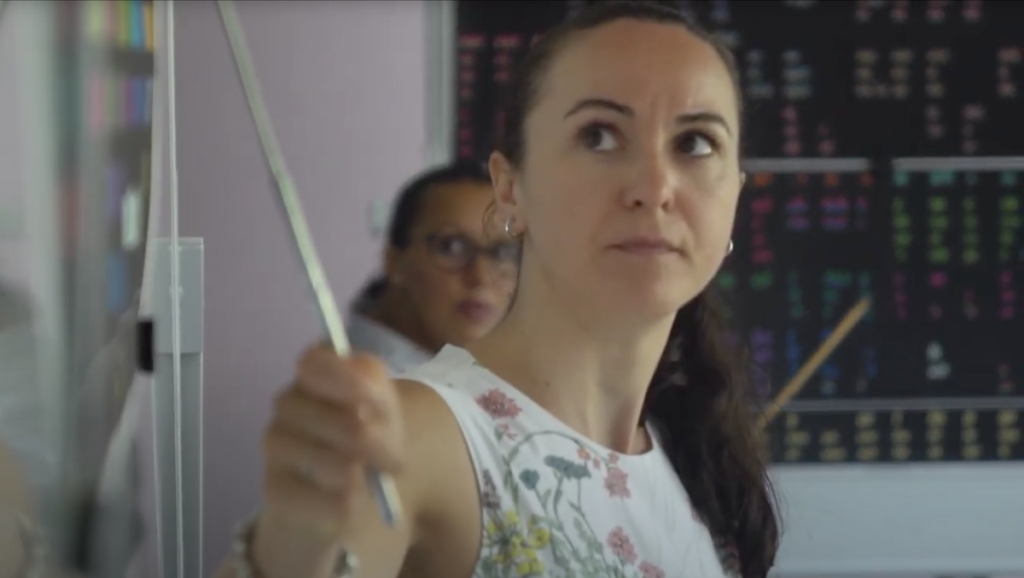
And they need to get used to the different way the foreign language “works”. For example, the use of Cuisenaire rods enables us to teach grammar through situations—avoiding translation, explanations and rules—because the combination of people’s perception, their experience of the language, feedback from the teacher and practice allows them to gradually discover for themselves how the world they live in is expressed in this language.
Working with the clock and the calendar and exploring what people actually did yesterday, last week, or last year, or expect to do next week, next month or next year, enables an exploration of time and verb forms. This is always based on the students’ reality, and is therefore vivid to them, taken from their own perceptions, lives and experience. Working with numbers enables students to practise pronunciation and provides the empowering experience of saying and controlling long utterances.
If you’re working with beginners, start students experimenting with their voices, then work on the functional vocabulary, and use this progression framework and syllabus (English or French) to judge their progress.
If you’re working with more advanced students then start by finding out what students can do already through a class conversation. Above all prepare yourself for whatever may come in your classes by practising how to be a better teacher.